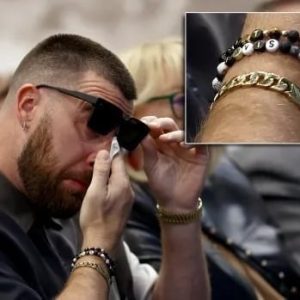
At first, his presence felt like an intrusion into private sorrow, an uninvited shadow lingering too close to grief. Week after week, he appeared at the same grave, standing just far enough away to avoid contact yet close enough to be noticed. The family watched him from a distance, uncertainty hardening into suspicion. In their minds, they built explanations—hidden connections, unfinished business, even imagined betrayal tied to the name carved into stone. Still, he never spoke. He simply stood there in silence, helmet in hand, eyes fixed on the headstone as if the act itself carried meaning beyond words.
Time did not soften their questions, but it dulled their urgency. Curiosity eventually outweighed caution, and one day they approached him. What they expected was confrontation or confession. What they received instead was something quieter, heavier, and unexpectedly human. There was no scandal, no hidden relationship, only a truth that reframed everything they thought they understood.
The man explained that years earlier, their loved one had saved his daughter’s life during a moment when he had nothing left to give—no power, no influence, only desperation. She had done so without seeking recognition or repayment, disappearing afterward as though it were the most natural thing in the world. His visits, he said, were not about grief alone, but gratitude. A weekly return to the only place where he felt he could still say thank you.
In that moment, suspicion dissolved into something far more complex. The grave was no longer a place of imagined betrayal, but of unspoken connection. Over time, the family began to meet him there, not as an outsider, but as someone bound to their loss in a different way. What had once divided them became a shared remembrance—proof that some debts are never spoken aloud, only carried forward in silence.