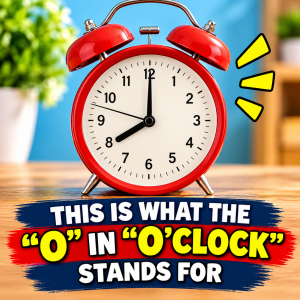
The “O’” in o’clock comes from the phrase “of the.” So when you say, “It’s three o’clock,” you’re using a shortened form of the older expression “three of the clock.” In other words, the phrase identified the hour according to the clock. That wording sounds unusual today, but centuries ago it made much more sense.
Before mechanical clocks became widespread, people could estimate time using sundials, water clocks, candle clocks, hourglasses, and the position of the sun. As mechanical clocks became increasingly important, expressions such as “of the clock” helped distinguish clock time. Like many frequently used phrases, it gradually became shorter in everyday speech until “of the clock” became “o’clock.”
The apostrophe remains because it marks the contraction. Similar traces of older English survive in expressions such as Jack-o’-lantern, historically associated with “Jack of the lantern,” and will-o’-the-wisp. Another old-fashioned contraction is ne’er, meaning “never,” which survives in the expression ne’er-do-well. These unusual forms are small reminders of how much English has changed over the centuries.
So the next time you say, “It’s six o’clock,” remember that you’re repeating a shortened expression with centuries of history behind it. The little apostrophe preserves part of a phrase that disappeared from ordinary conversation long ago. “O’clock” essentially carries the historical sense of “of the clock”—a tiny linguistic detail hiding in a word most of us use without ever thinking about it.



This Post Has One Comment