The answer comes from inventor Seth Wheeler’s 1891 patent, which included illustrations showing toilet paper hanging over the top of the roll, with the loose end falling down the front.
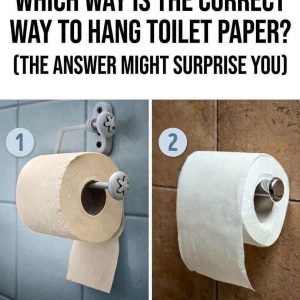
In other words, if you’re choosing between the two arrangements described in the picture, option 2 matches the historical patent illustration.
And there are practical reasons why this particular arrangement remains popular.
When the paper hangs over the front, the loose end is immediately visible and easier to grab. You don’t have to reach behind the roll or feel around to find where the paper begins.
It can also reduce the likelihood of your hand brushing against the bathroom wall when reaching for the loose end, making the arrangement feel slightly more convenient.
But what about hanging the toilet paper underneath?
Option 1 has its advantages, too. In households with young children or curious pets, positioning the loose end against the wall can sometimes make it harder to spin the roll and unravel large amounts of paper.
Anyone who has walked into a bathroom and discovered metres of toilet paper scattered across the floor may appreciate that little detail!
Ultimately, both arrangements are perfectly usable, and the original patent illustration isn’t a rule that everyone must follow.
However, if you’re curious about how the roll appeared in Wheeler’s historical design, the answer is clear.
Over the top, with the loose end hanging down the front.
So the next time someone starts the great toilet-paper debate, you’ll have an interesting piece of history to share.
Who would have thought that such a simple household habit could inspire arguments lasting more than a century?



This Post Has One Comment