Was Jesus white, Black, or another race entirely? Go inside the complicated history of what color Jesus of Nazareth may have been.
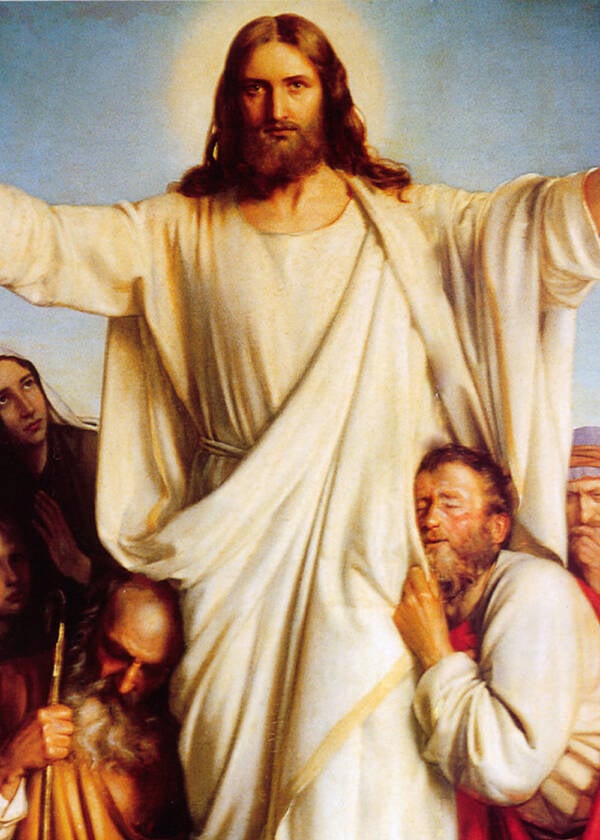
Public DomainA 19th-century depiction of a white Jesus Christ by Danish painter Carl Heinrich Bloch.
Jesus Christ has been an object of veneration and worship for nearly 2,000 years. As the central figure in Christianity, images of him fill churches, homes, and museums around the world. But why is Jesus white in most of these depictions?
As Jesus’ following spread out of the Middle East starting in the first century C.E. — sometimes via devoted missionary work and sometimes by more aggressive methods — people across western Europe started casting Christ in their image and white Jesus depictions began to proliferate.
Doing so was relatively easy because the Bible contains only a few (contradictory) words on what Jesus’s race was and what he looket like. However, scholars have a better idea of what people, in general, looked like in the Middle East around the first century — and they weren’t light-skinned.
Yet, a white Jesus remains the standard in most modern depictions. Why?
What Race And Color Was Jesus? Analyzing The Early Depictions Of Christ
Though the Bible tells the story of Jesus Christ — whose real name was actually Yeshua — it says little about his appearance. In the Old Testament, the prophet Isaia describes Jesus as having “no beauty or majesty.” But the Book of Psalms directly contradicts this, calling Jesus “fairer [more beautiful] than the children of men.”
Other descriptions of Jesus Christ in the Bible offer few other clues. In the Book of Revelation, Jesus is described as having hair like “white wool,” eyes like “flames of fire,” and feet “like burnished bronze, refined as in a furnace.”