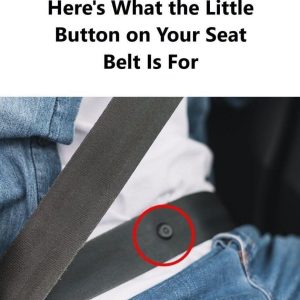
The small plastic piece is commonly called a seat belt stop button, and its purpose is surprisingly practical. It prevents the metal latch plate from sliding too far down the seat belt strap when the belt is not being used. Without this button, the latch could slip toward the floor, leaving you reaching awkwardly between the seat and the door every time you want to buckle up.
By keeping the latch plate at a convenient height, the stop button makes fastening your seat belt quicker and easier. It also helps keep the metal component in a more predictable position when the belt retracts. This small design feature might seem insignificant, but anyone who has experienced a missing or broken stop button knows how frustrating it can be to search for the buckle before every journey.
If the button breaks or falls off, the latch plate may slide farther down the strap than intended. Depending on the vehicle’s design, it might become harder to reach or occasionally rattle against nearby interior surfaces. Replacement stop buttons are available for many vehicles, although drivers should use parts suitable for their particular seat belt and follow manufacturer guidance. The button itself is not responsible for locking the belt during a collision, and it should never be confused with the belt’s actual safety mechanisms.
The discovery is a reminder that even the smallest details inside a vehicle often serve a purpose. From adjustable headrests to warning lights and carefully positioned controls, automotive designers consider many everyday situations that drivers rarely notice. The seat belt stop button is one of those quiet conveniences that does its job without attracting attention. You might never have thought about it before, but the next time you fasten your seat belt, you’ll probably notice that tiny piece of plastic.



This Post Has One Comment