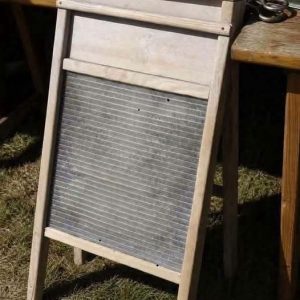
The mysterious object was an old-fashioned laundry wringer, a device that once made washing clothes considerably easier for hardworking families. Long before modern washing machines became common household appliances, doing the laundry was an exhausting task that could occupy much of the day. Clothes were soaked, scrubbed by hand, rinsed, and then squeezed to remove as much water as possible before hanging them to dry. A laundry wringer helped with that final step. Wet fabric was carefully fed between two rollers while someone turned the handle, pressing out excess water. It was a clever invention that saved considerable effort compared with twisting and squeezing heavy, soaking-wet clothes by hand.
For many families, washday was practically an event of its own. Mothers and grandmothers gathered dirty clothes, heated water, prepared soap, and worked through piles of laundry that seemed never-ending. Heavy sheets, towels, work clothes, and children’s garments all needed attention. Once washed, everything had to be rinsed and passed through the wringer before being carried outside to the clothesline. The familiar sight of freshly washed sheets blowing in the breeze was part of everyday life. So were the wooden clothespins, large laundry baskets, and the wonderful smell of clean clothes drying in the sunshine. Those simple scenes remain powerful childhood memories for many people who grew up before automatic washing machines were widespread.
But the old wringer also reminds us that household work was not always easy or safe. The rollers required careful handling because fingers, loose clothing, or hair could become caught in the mechanism. Parents often warned children to stay away while the machine was being used. Despite those risks, wringers represented an important improvement over earlier laundry methods. Some were attached to washtubs, while others became part of wringer washing machines that combined a motorized wash cycle with manually operated rollers. These machines remained familiar in many homes for decades, even as newer automatic appliances gradually became more affordable and widely available.
When the seller told me that the wringer had belonged to her grandmother, I suddenly saw it differently. The scratches on its frame were no longer imperfections. They were reminders of countless washdays, tired hands, and the quiet determination of someone caring for her family. I decided to take it home, not because I needed to wash clothes the old-fashioned way, but because I wanted to preserve a little piece of history. Today, it sits as a reminder of how much everyday life has changed and how much work previous generations performed without the conveniences we often take for granted. Sometimes an ordinary object can tell a more meaningful story than the most expensive antique.
❤️ Our mothers and grandmothers worked incredibly hard with tools that younger generations may never recognize.




This Post Has One Comment