Born Francis Thomas Avallone on September 18, 1940, Frankie Avalon grew up in South Philadelphia with a passion for music. Long before he became a teenage heartthrob, he demonstrated impressive talent as a trumpet player. His musical abilities opened doors while he was still young, eventually leading him toward a recording career that would transform his life. By the late 1950s, Avalon had become one of America’s most popular young singers. His 1959 hits “Venus” and “Why” both reached number one on the Billboard Hot 100, securing his place in pop music history. His gentle voice and polished appearance offered a distinctive style during an era when rock and roll was changing American entertainment.
As his popularity grew, Avalon successfully moved from recording studios to movie sets. During the 1960s, he became especially famous for his beach-party films alongside Annette Funicello. Movies such as Beach Party and Beach Blanket Bingo captured the youthful excitement of sun-filled summers, dancing, friendship, and romance. For audiences who experienced those films firsthand, they became treasured reminders of a simpler period in popular culture. Avalon and Funicello developed an enduring professional partnership, and their screen chemistry helped make the beach-party movies memorable. Years later, their reunion in Back to the Beach brought a welcome wave of nostalgia to longtime fans.
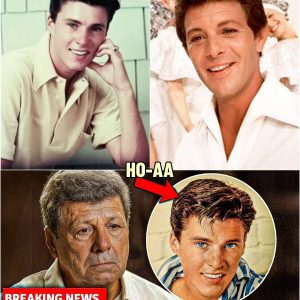
Avalon also belonged to a remarkable generation of young entertainers that included Ricky Nelson, another major teenage star of the period. Both performers experienced the extraordinary pressures of early fame while building careers that reached millions of households. Nelson became famous through television and music, while Avalon established himself through hit records and films. Although stories sometimes describe an especially close personal friendship between the two, the full extent of that relationship is not clearly established by the information available. What remains undeniable is their shared contribution to the soundtrack of a generation. Nelson’s passing in 1985 marked a heartbreaking loss for fans of early rock and roll, while Avalon’s continuing legacy has helped preserve memories of that musical era.
Beyond his public career, Avalon built a family life with his wife, Kathryn Diebel, whom he married in 1963. Together they raised eight children, creating a personal story that extended far beyond Hollywood fame. His career also reached new audiences through appearances such as his memorable role as the Teen Angel in the 1978 film Grease. As the decades passed, the music that once filled dance halls and radios continued to evoke powerful memories for listeners. Now 86, Avalon represents a connection to a remarkable chapter of entertainment history. His story reminds us that lasting success isn’t measured only by record sales or applause, but also by the people, memories, and experiences that give life its meaning.




This Post Has One Comment