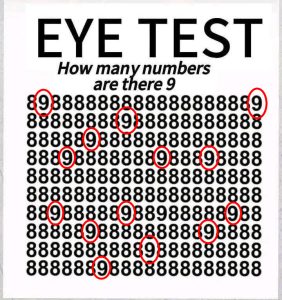
The easiest way to solve the puzzle is to ignore the entire grid at once and examine each horizontal row separately. Begin at the top and look specifically for the little tail that distinguishes a nine from an eight. Keeping a finger or cursor beside the row can also help prevent you from accidentally counting the same digit twice.
The first row contains two hidden nines. The next two rows contain one each, while another row contains several scattered across the line. Some later rows contain no nines at all, which makes the challenge even trickier because your eyes start expecting every row to contain something different.
Continue carefully through the lower half and several more nines begin appearing. They are placed at different distances from one another, so there is no predictable pattern you can follow. That means guessing based on spacing usually causes people to miss at least one.
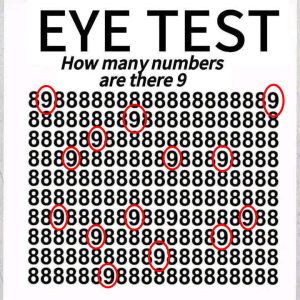
After counting every row carefully, the total number of hidden 9s is 15. If your first answer was lower, look again slowly instead of scanning the entire image. Once your eyes learn to search specifically for the small tail, the hidden digits become much easier to recognize. That is what makes puzzles like this entertaining: the numbers were visible the entire time, but the repeating pattern encouraged your brain to overlook them.



This Post Has One Comment