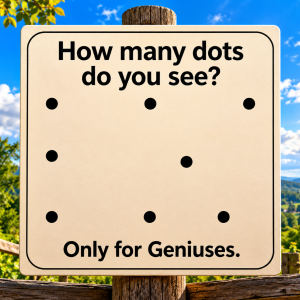
While this puzzle isn’t a scientific personality, intelligence, or vision test, it’s a fun demonstration of how differently people can process visual information. If you counted quickly, you may simply have relied more on your first impression and pattern recognition. If you counted slowly, you gave yourself more time to examine individual details.
And if your answer changed after looking again, you’ve experienced exactly what makes optical illusions so fascinating. Our brains don’t simply record everything our eyes see like cameras. They actively interpret visual information, which means attention and context can sometimes change what we notice.
If you want a more accurate count, try examining one small section at a time rather than scanning the entire image. You can also cover portions of the picture and reveal them gradually. Looking away briefly and returning with fresh eyes may help you notice dots you overlooked before.
That’s part of what makes these puzzles so entertaining. People can examine exactly the same image and still arrive at different answers on their first attempt. So, how many dots did you count? Take one more careful look before checking the solution—you might be surprised by what you missed.



This Post Has One Comment