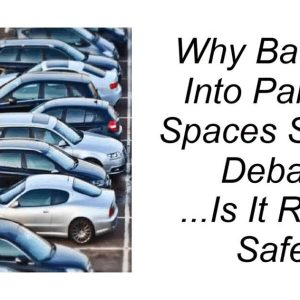
Backing into a parking space is one of those driving habits that can spark surprisingly strong opinions. Some motorists prefer pulling straight into an empty space because it feels quicker, easier, and more convenient. Others deliberately reverse into parking bays because they believe it makes leaving safer. Both approaches have advantages and disadvantages, depending on the layout of the parking lot and the surrounding traffic. Reverse parking can take longer, particularly when the space is narrow or other vehicles are waiting. However, the extra time spent parking may provide an important benefit later. When a vehicle is backed into a space, the driver can usually leave by moving forward, with a clearer view of pedestrians, cyclists, and approaching vehicles.
One of the biggest concerns with nose-first parking appears when it’s time to reverse out. Cars parked on either side can obstruct the driver’s view, making it difficult to see people walking through the aisle or vehicles approaching from either direction. This can be especially concerning in busy shopping centers where children, older pedestrians, and shopping carts may suddenly appear between parked cars. Reversing into a space doesn’t eliminate these risks, but it allows the driver to perform the reversing maneuver while approaching the bay, when the surrounding area may be easier to observe. Once parked, leaving forward can make it easier to assess traffic before entering the aisle.
Of course, reverse parking isn’t always the best option. In a crowded parking lot, a driver who takes several attempts to back into a space may temporarily block traffic and frustrate others. Some parking facilities also require vehicles to park nose-first because of their design, signage, or operational rules. Modern reversing cameras and parking sensors can help drivers maneuver, but they cannot detect every possible hazard. Mirrors, shoulder checks, slow speeds, and careful observation remain essential regardless of the parking method. There is also no universal law requiring or prohibiting reverse parking. Drivers must follow the rules posted at each location and comply with applicable traffic regulations.
Ultimately, the safest parking method depends on visibility, available space, traffic conditions, and the driver’s ability to complete the maneuver carefully. Backing into a parking bay can offer a meaningful advantage when leaving, particularly where reversing into a busy aisle would create limited visibility. But pulling in forward can also be appropriate when conditions make it safer or more practical. The most important thing is to remain patient, watch for pedestrians, and avoid rushing because another driver is waiting. A few extra seconds spent parking carefully are far less important than preventing an avoidable collision. Good drivers don’t simply choose the fastest method; they consider the safety of everyone around them.
Which type of driver are you? Do you always back into parking spaces, or do you prefer pulling straight in? 🚗



This Post Has One Comment