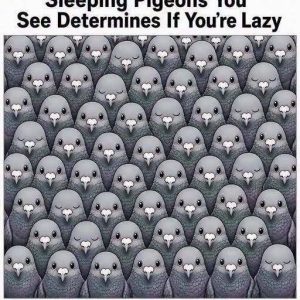
When you look at a picture containing several pigeons, your brain doesn’t necessarily process every bird at the same moment. Instead, your attention is naturally drawn toward certain shapes, colors, positions, and contrasts. A pigeon standing near the center of the image might immediately catch your eye, while another bird positioned near the edge may go unnoticed. This is a normal part of visual perception. Our brains constantly decide which information deserves attention, helping us make sense of complicated scenes without examining every tiny detail. That’s why a quick glance can produce a different result from a careful inspection.
One interesting aspect of visual puzzles is how easily our attention can overlook objects that are actually visible. If two pigeons overlap, you might initially see them as one larger shape. If a bird has feathers that closely match the surrounding background, it may take longer to recognize its outline. Lighting, shadows, and the arrangement of objects can also influence what stands out. When you look at the image a second time, your brain has already developed a better understanding of the scene. You may begin noticing individual beaks, wings, tails, and feet that were overlooked during your first attempt.
This is also why comparing answers with other people can be so entertaining. Imagine showing the same picture to your spouse, children, grandchildren, or friends. One person might immediately count five pigeons, while another notices seven. Someone else may discover a bird that everyone overlooked. These differences don’t necessarily indicate that one person is more intelligent or observant than another. They simply demonstrate how attention can vary depending on where someone looks first and how carefully they examine the image. Even the same person may produce different answers after taking a short break and returning to the picture.
The most enjoyable part of this challenge is that it encourages people to slow down and look more carefully. In everyday life, we often glance at things without noticing every detail. Visual puzzles remind us that there’s sometimes more to a scene than our first impression suggests. Although online quizzes occasionally claim that the number of animals you spot reveals your personality or intelligence, there is no reliable scientific basis for making those conclusions from a single picture. This pigeon-counting challenge is simply a fun exercise in attention and observation. So take one final look at the image, examine every corner, and compare your original answer with your new count. You might be surprised by how much you missed!
🕊️👀 How many pigeons did YOU notice on your first look, and how many did you find after looking again? Write both numbers in the comments and challenge your friends!

This Post Has One Comment