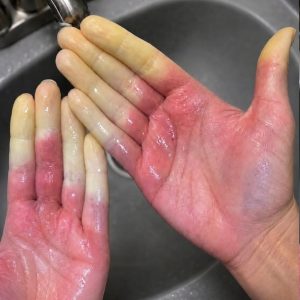
When your fingers become cold, small blood vessels naturally narrow to help your body conserve heat. However, in people with Raynaud’s phenomenon, this response can be unusually strong. The arteries supplying the fingers temporarily constrict, reducing blood flow and sometimes causing the skin to turn white. If the reduced circulation continues, the fingertips may appear blue. When blood flow returns, the skin can become red, warm, and uncomfortable, often accompanied by tingling or throbbing. Not everyone experiences all three colors, and the changes may affect several fingers or toes. Cold temperatures and emotional stress are common triggers, although episodes can vary considerably from person to person.
Doctors distinguish between primary and secondary Raynaud’s phenomenon. Primary Raynaud’s occurs without an identified underlying disease and is generally the more common, milder form. It often begins during adolescence or early adulthood. Secondary Raynaud’s is associated with another condition or contributing factor, such as certain autoimmune diseases, blood-vessel disorders, or medications. This distinction matters because secondary Raynaud’s can sometimes cause more serious circulation problems. New symptoms beginning later in adulthood, severe pain, sores on the fingertips, or episodes affecting only one hand may warrant closer medical evaluation. A healthcare professional can review your symptoms, examine your circulation, and determine whether further testing is appropriate.
For many people, simple precautions can help reduce episodes. Keeping your entire body warm, wearing gloves in cold weather, and avoiding sudden temperature changes may make a difference. Even reaching into a freezer or holding an icy drink can trigger symptoms in someone who is sensitive to cold. During an episode, move somewhere warm and gently warm your hands using body heat or comfortably warm water, not very hot water. Avoid smoking or nicotine, which can narrow blood vessels, and discuss possible medication triggers with a healthcare professional rather than stopping prescribed treatments independently. Some people with more troublesome symptoms may benefit from medications that help relax blood vessels, depending on their individual circumstances.
Although Raynaud’s phenomenon is often manageable, certain warning signs should never be ignored. Seek urgent medical attention if a finger remains unusually pale or blue despite gentle warming, becomes severely painful, loses sensation persistently, or develops signs of tissue damage. Sudden severe symptoms affecting one hand may indicate a circulation problem other than Raynaud’s. Recurrent episodes also deserve assessment, particularly when accompanied by joint pain, skin changes, or other unexplained symptoms. Remember that a photograph or brief color change alone cannot establish a diagnosis. Understanding your triggers and recognizing concerning symptoms can help you respond appropriately without assuming that every cold fingertip is dangerous.
❤️ Have you ever experienced fingers turning white, blue, or red in cold weather? Did you know this could be related to Raynaud’s phenomenon?



This Post Has One Comment