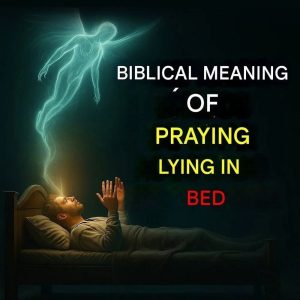
One of the clearest biblical references to remembering God while resting appears in Psalm 63:6. In this passage, the writer describes remembering God upon his bed and meditating on Him during the night. For many Christians, this verse offers reassurance that spiritual reflection and prayer are not limited to churches, formal gatherings, or kneeling beside a bed. Quiet moments of rest can also become meaningful opportunities to express gratitude, seek guidance, or find comfort through faith.
The Bible also describes several different prayer postures. In Daniel 6:10, Daniel kneels in prayer, while Mark 11:25 refers to standing and praying. Meanwhile, 1 Thessalonians 5:17 encourages believers to pray continually. Taken together, these passages suggest that prayer is not restricted to one physical position. Kneeling can express humility and reverence, but standing, sitting, or lying down does not necessarily make a person’s prayer less sincere.
Consider someone who is elderly, recovering from an illness, physically exhausted, or unable to kneel comfortably. Would their circumstances prevent them from communicating with God? Most Christian interpretations emphasize that sincere prayer is not dependent on physical ability. A person lying in a hospital bed, resting after a difficult day, or waking during the night can still pray. Some believers also find that quiet nighttime prayers help them reflect on their experiences, express worries, and approach sleep with a greater sense of peace.
However, physical posture can still hold spiritual significance. Some Christians choose to kneel because it helps them concentrate, demonstrate respect, or practice a meaningful religious tradition. Others prefer sitting quietly or praying with open hands. Different churches may emphasize different customs, especially during formal worship. The important distinction is between personal prayer and specific liturgical practices, which may have their own expectations.
So, is it okay to pray while lying in bed? For personal prayer, the biblical passages discussed here support the understanding that it is. What matters most is not whether someone is standing, kneeling, sitting, or resting, but the sincerity and intention behind the prayer. A quiet conversation with God before falling asleep can be just as meaningful as a prayer offered at another time of day.




This Post Has One Comment