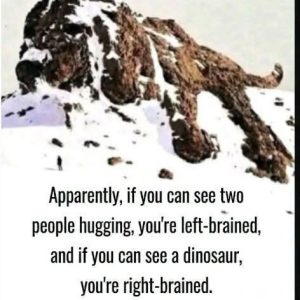
The surprising answer is that the mysterious shape resembles a gigantic dog peacefully sleeping in the snow. What initially appears to be a strange collection of snowy ridges and shadows begins to look different once you recognize the animal’s outline. Its head rests near the front, its paws appear to extend over a ridge, and its long body stretches toward the right side of the image. Suddenly, the confusing shapes seem to connect into one recognizable figure. The illusion becomes especially interesting because many people spend several moments searching for something completely different before noticing the dog.
Why does this happen? Our brains are constantly trying to recognize familiar objects, faces, and patterns. This process helps us understand the world quickly, but it can also lead us to interpret ambiguous images in unexpected ways. When someone suggests that a picture contains a dinosaur or two people hugging, those ideas can influence what we search for. Psychologists describe this kind of influence as perceptual priming. Our expectations can guide our attention toward certain details while making other possibilities harder to notice.
The snowy background adds another layer of confusion. Similar colors, uneven surfaces, and shadows can make separate objects appear connected or hide the boundaries between different shapes. This makes it difficult to determine exactly where one form ends and another begins. Once the outline of the sleeping dog becomes recognizable, however, the entire scene may seem much easier to understand. Interestingly, some people find it difficult to return to their original interpretation after seeing the hidden figure. Their brains have already organized the visual information into a familiar pattern.
Despite claims that puzzles like this can reveal whether someone is left-brained or right-brained, there is no reliable scientific evidence that seeing one figure before another determines a person’s dominant brain hemisphere or personality. Both sides of the brain work together during visual perception, and the order in which someone notices an image can depend on attention, expectations, experience, and many other factors. The real fun of this illusion isn’t discovering a hidden personality trait. It’s seeing how differently people interpret the same picture and how quickly their perception can change after noticing a new detail.
🐶 What did you see FIRST?
A — Two people hugging
B — A dinosaur
C — A giant sleeping dog
D — Something completely different
👀 Tell us your answer in the comments before checking what everyone else saw!


This Post Has One Comment