For the first time, scientists have shown that heart muscle cells can regrow after a heart attack in humans, a process that had previously only been observed in mice.
Groundbreaking work led by specialists from the University of Sydney, the Baird Institute, and the Royal Prince Alfred Hospital in Sydney has found that heart muscle cells can regrow after a heart attack. This discovery points toward the future development of regenerative treatments for cardiovascular disease.
After the findings were published in Circulation Research, first author Dr. Robert Hume, from the Faculty of Medicine and Health and Charles Perkins Centre, and Lead of Translational Research at the Baird Institute for Applied Heart and Lung Research, outlined why the results matter:
“Until now, we’ve thought that, because heart cells die after a heart attack, those areas of the heart were irreparably damaged, leaving the heart less able to pump blood to the body’s organs.
“Our research shows that while the heart is left scarred after a heart attack, it produces new muscle cells, which opens up new possibilities.
“Although this new discovery of regrowing muscle cells is exciting, it isn’t enough to prevent the devastating effects of a heart attack. Therefore, in time, we hope to develop therapies that can amplify the heart’s natural ability to produce new cells and regenerate the heart after an attack.”
While increased mitosis (a process in which cells divide and reproduce) after a heart attack has previously been observed in the heart muscle of mice, this is the first time the same process has been confirmed in humans.
Heart disease in Australia and the world
Cardiovascular disease remains the leading cause of death worldwide and accounts for nearly a quarter (24 percent) of all deaths in Australia.
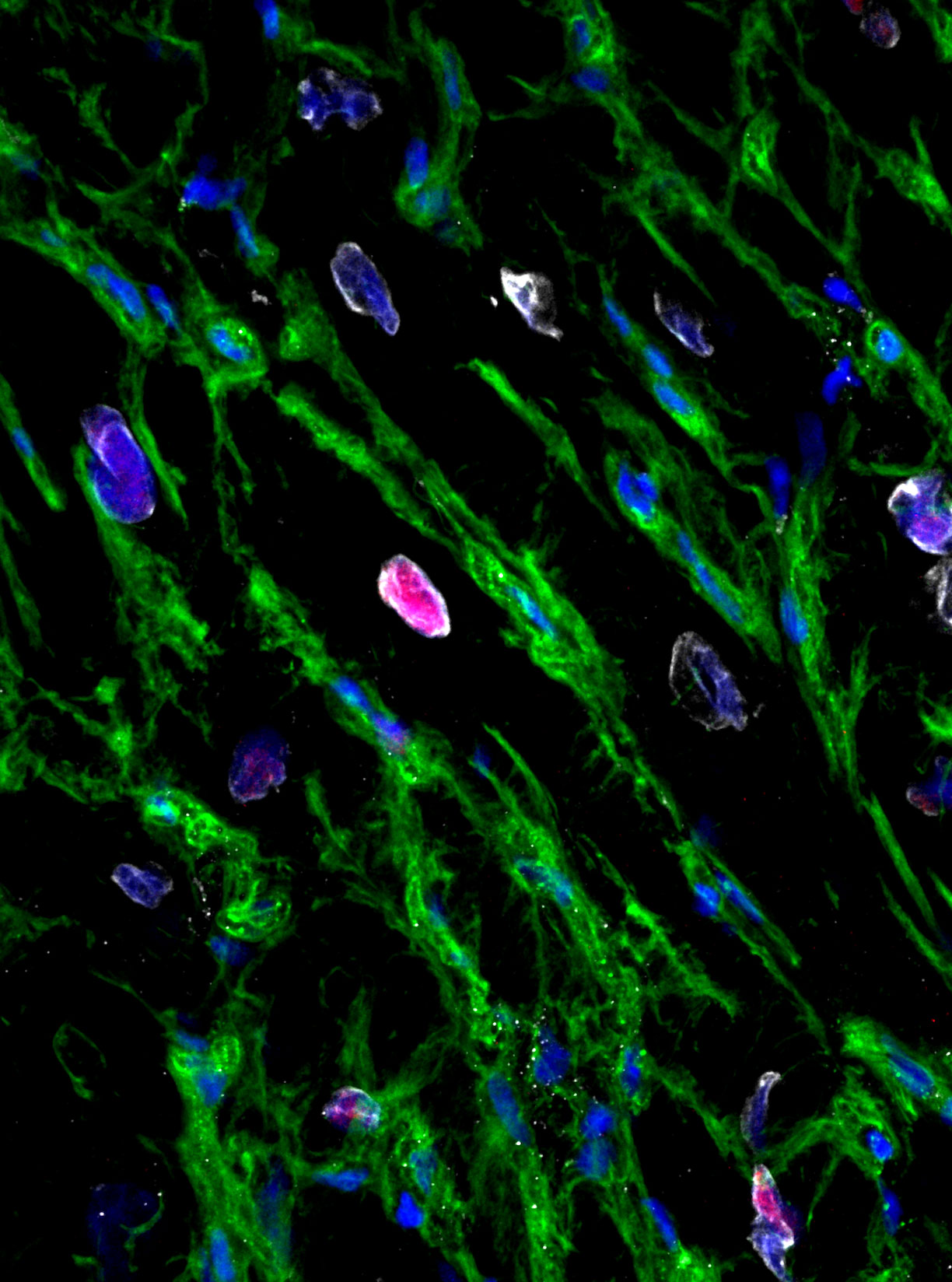
A heart attack can destroy up to one-third of the cells in the human heart. Even though survival rates have improved significantly over the past decade due to advances in treatment, many patients still develop heart failure, a condition that can only be cured through transplantation.
In Australia, around 144,000 people are living with heart failure, yet only about 115 heart transplants are performed each year, highlighting a major gap between demand and available treatment.
Pioneering techniques made research possible
This study is the first globally to analyze tissue collected from living patients during bypass surgery. These “pre-mortem” samples were obtained from consenting individuals undergoing heart bypass procedures at the Royal Prince Alfred Hospital in Sydney.
Researchers gathered samples from both diseased and healthy areas of the heart using a technique developed by Professor Paul Bannon and Professor Sean Lal, who are affiliated with the University of Sydney, Royal Prince Alfred Hospital, and The Baird Institute.
New therapies to regenerate the heart
By establishing a reliable way to collect living heart tissue, the team has created a laboratory model that can be used to investigate new approaches to repairing the human heart.
Professor Sean Lal, senior author of the study from the School of Medical Sciences and a heart failure cardiologist at the Royal Prince Alfred Hospital, said, “Ultimately, the goal is to use this discovery to make new heart cells that can reverse heart failure.
“Using living human heart tissue models in our work means that we will have more accurate and reliable data to develop new therapies for heart disease.
“Already, our research using these samples has identified several proteins that have previously been shown to be involved in the regeneration of the heart in mice, which is a very exciting prospect to now translate to humans.”
Reference: “Human Hearts Intrinsically Increase Cardiomyocyte Mitosis After Myocardial Infarction” by Robert D. Hume, Jessica Warwick, Woo Jun Shim, Cassandra Malecki, Mengbo Li, Lakshay Seth, Dylan Harney, Julien Dagher, Trina Lum, Geraldine Tierney, Wendy Cooper, Eugene Slaughter, Xiaosuo Wang, Lisa Nguyen, Louise Cole, James Edelman, Fairooj N. Rashid, Callum Houlahan, Antony Gao, Angela L. Ferguson, James J.H. Chong, Mark Larance, John F. O’Sullivan, Nathan J. Palpant, Paul Bannon and Sean Lal, 4 December 2025, Circulation Research.
The research was supported by a grant from the R T Hall Trust and the support of the Baird Institute for Applied Heart and Lung Research. The authors declare no conflicts of interest.