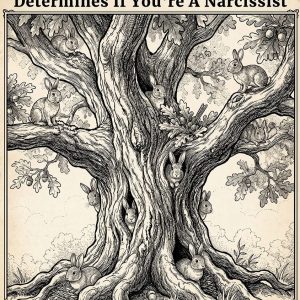
These puzzles work because our brains naturally organize complicated images into familiar patterns. One person may immediately focus on the most obvious rabbits, while another begins searching the edges, empty spaces, and overlapping shapes. That difference can make two people looking at exactly the same picture report completely different totals.
Online personality interpretations often attach meanings to those numbers. Spotting fewer rabbits might be described as seeing the “big picture,” while finding more may be associated with patience, persistence, or attention to detail. Such descriptions can be entertaining, especially when comparing your result with friends or family members.
However, the number you find cannot actually determine whether you are a narcissist. Narcissistic personality disorder is a clinical condition that cannot be diagnosed through a hidden-animal picture. Your result is much more likely to reflect how you approached this particular puzzle, how long you examined it, the image quality, and which shapes caught your attention first.
So if you discovered many rabbits, enjoy your sharp observation skills. If you found only a few, take another look—you may suddenly notice shapes that seemed invisible seconds earlier. That transformation is the real appeal of optical puzzles: once your brain recognizes a hidden figure, it becomes surprisingly difficult not to see it. The rabbit count makes a fun challenge, but it shouldn’t be treated as a genuine personality diagnosis.




This Post Has One Comment