Taylor began by disassembling the dressing table, including its built-in clock. Using a heat gun and scraper, he carefully removed layers of thick yellow paint from the drawer fronts. He then applied paint stripper and allowed it to work before wiping away the residue, gradually revealing the original wood that had been hidden underneath.
Next came deep cleaning and solvent treatments to remove stubborn paint from corners and grooves. The drawers also needed considerable attention. Taylor sanded their interiors and exteriors, strengthened weak joints with glue blocks, and worked carefully to make sure each drawer could slide smoothly again. Some pieces, however, were simply too damaged to rescue.
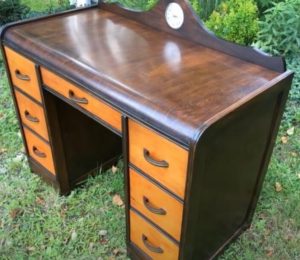
Rather than abandoning the project, Taylor recreated missing elements from scratch, working to match the dressing table’s original design. Once the structure was solid again, he moved on to the finishing touches. The body received a rich, dark walnut appearance, while the drawers were finished in a warmer mahogany tone, creating contrast while preserving the character of the piece.
The result was a dramatic transformation. What had been offered for free because it appeared worn out and unwanted became an attractive and functional piece of furniture once again. The restoration demonstrates what patience, woodworking skill, and imagination can accomplish with something others might easily discard. For DIY enthusiasts, it’s also a reminder to look twice at old furniture before deciding it has reached the end of its life—because sometimes the most impressive feature is still hidden beneath the surface.







This Post Has One Comment