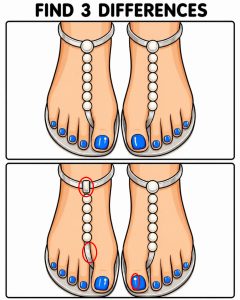
Start with the left sandal in the first image, then move to the same area in the second. Compare the number, shape, and position of every pearl. After that, check the toes and polish carefully. Tiny changes in color, missing details, or slightly altered shapes are often where spot-the-difference artists hide their best tricks.
Next, move to the right sandal. Trace the straps from top to bottom instead of looking at the entire shoe. A missing pearl, a shifted line, or a small change in the sandal design can disappear when your eyes are taking in the whole scene. Looking section by section forces your brain to stop assuming the pictures match.
If you are still stuck, change your viewing strategy. Cover half of one picture and compare only the visible section. Then switch sides. You can also look away for a few seconds and return with fresh eyes. That small reset often makes a hidden difference suddenly stand out because your brain is no longer locked into its first impression.
Another useful method is to focus on symmetry. Sandals often contain repeated shapes, so anything that breaks the pattern deserves attention. Count decorative elements instead of merely glancing at them. Even when two sections appear identical, one tiny missing or altered feature can be enough to create the final difference.
The fun of this puzzle is not just finding the three changes. It is noticing how easily our vision can overlook something when two images seem almost identical. Some people catch all three immediately, while others find two and spend ages searching for the last one. Neither result means anything serious about intelligence—it is simply a playful test of attention. So how did you do: all three, only two, or is one stubborn difference still hiding from you?




This Post Has One Comment